




- Your cart is empty Browse Shop
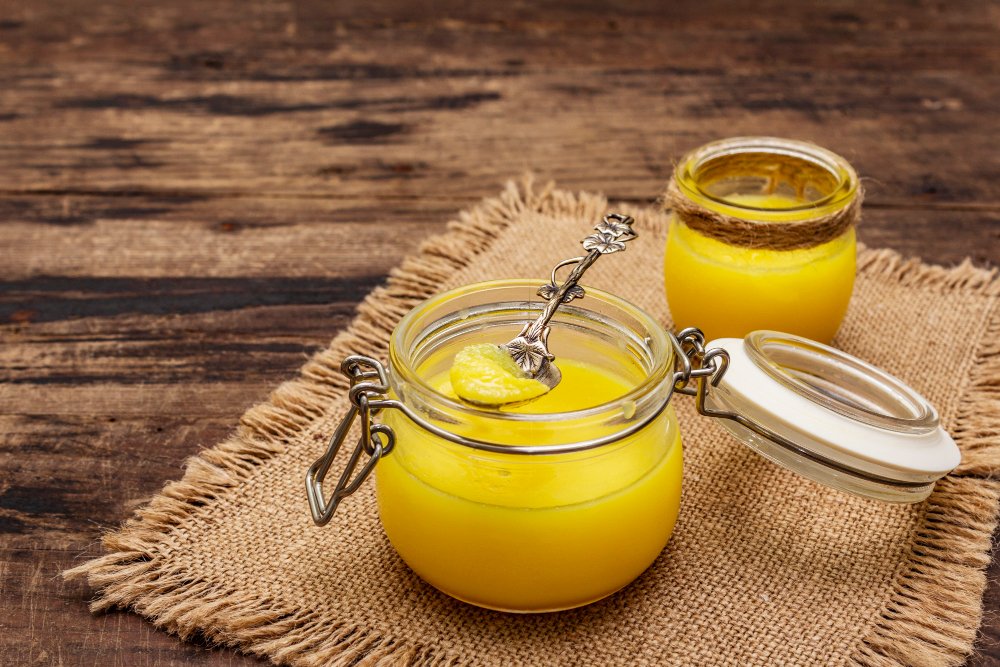
Ghee has been on every Indian dining table for thousands of years. It is in our dals, our rotis, our khichdis, and our special occasion sweets. But somewhere between tradition and commercialisation, the ghee most families in Gurugram are buying today has very little in common with the ghee their grandparents made.
Adulteration in the ghee market is widespread. FSSAI surveys have repeatedly found that a significant portion of packaged ghee sold in India contains vegetable fats, refined oils, synthetic flavouring, and chemical colouring agents designed to mimic the colour and smell of real ghee.
This guide will help you understand what real desi ghee looks, tastes, and smells like and where to find genuine, farm-made ghee in Gurugram and NCR.
What Is Real Desi Ghee? And Why Does It Matter?
Real desi ghee is made from the cream of whole cow’s milk, churned into butter, and then slow cooked on low heat until the milk solids separate and the pure golden fat remains. That is it. No additives. No preservatives. No vegetable oil. Just concentrated dairy fat in its most traditional form.
The nutritional profile of real ghee is impressive. It contains fat soluble vitamins A, D, E, and K2 in bioavailable form. It is rich in conjugated linoleic acid (CLA), which has been studied for its anti inflammatory and metabolic benefits. And because the milk proteins are removed during the clarification process, genuine ghee is generally well-tolerated by people who are lactose sensitive.
None of these benefits exist in adulterated ghee. A product blended with palm oil or vanaspati cannot replicate the nutritional integrity of real milk fat.
How to Identify Pure Desi Ghee at Home 5 Tests

1. The palm test
Place a small amount of ghee on your palm. Real ghee melts quickly with just your body heat because its melting point is close to body temperature (around 32 to 35 degrees Celsius). If it stays solid even after a minute on your warm palm, something is off.
2. The heat test
Heat a teaspoon of ghee in a small pan. Pure ghee heats up almost immediately and turns dark brown at the bottom that is the trace milk solids present. It will not spatter or smoke at low temperatures. Adulterated ghee may spatter (sign of water or non-dairy fat) or take much longer to melt.
3. The colour test
Pure desi ghee made from cow’s milk has a naturally yellowish colour due to beta-carotene from the cow’s grass diet. Ghee made from buffalo milk tends to be whiter. If a product labelled ‘cow ghee’ looks pure white, that is unusual. If it looks unnaturally yellow almost orange synthetic colour may have been added.
4. The smell test
Real ghee has a rich, nutty, slightly sweet aroma that intensifies when heated. If your ghee smells neutral or has a greasy, oily smell without that characteristic depth, the fat profile is likely not purely dairy based.
5. The iodine test
Dissolve a small amount of ghee in petroleum ether. Add a drop of iodine solution. If the mixture turns purple or blue black, starch or vegetable fats are present. Real pure ghee will not change colour with iodine.
Why Most Packaged Ghee Fails These Tests
Commercial ghee production is under pressure to keep costs low and volumes high. The retail price of pure ghee made from cow’s milk properly made in small batches from fresh cream cannot commercially compete with mass-produced ghee that blends cheaper fats.
This is why the safest ghee is farm made ghee. When the milk comes from known cows on a known farm, and the ghee is made in small batches on site, the supply chain is short enough that adulteration is both pointless and impossible.
Farm Made Ghee From Gurugram: What Gurvani Naturals Offers

Gurvani Naturals produces shuddh ghee on their farm on Sohna Road, Gurugram. The ghee is made from the milk of their own cows, using the traditional slow-cook method. No additives, no preservatives, no shortcuts.
Because the entire process happens on the farm from cow to cream to ghee the quality is verifiable. Customers who have visited the farm regularly describe the ghee as having that deep golden colour and distinctive aroma that is simply absent from packaged supermarket alternatives.
Gurvani delivers pure ghee as part of their farm produce offerings across NCR urugram, Delhi, Noida, and Faridabad.
How Much Real Ghee Should a Family Consume?
Traditional Ayurvedic practice recommends 1 to 2 teaspoons of desi ghee per day for adults. For children, small amounts regularly are considered beneficial for brain development and immunity. Of course, any dietary change should be discussed with your family doctor.
The key insight is this: the quality of ghee matters more than the quantity. A teaspoon of genuine farm made ghee is nutritionally superior to a tablespoon of an adulterated commercial product and far safer for your family.
Frequently Asked Questions
Where can I buy pure desi ghee in Gurugram?
Gurvani Naturals offers farm-made shuddh ghee for delivery in Gurugram and NCR. Visit gurvaninaturals.com or call +91 9170116611.
What is the difference between A2 ghee and regular ghee?
A2 ghee is made specifically from the milk of cows that produce A2 beta-casein protein typically indigenous breeds like Gir and Sahiwal. Regular commercial ghee may use milk from cross-bred cows that produce A1 protein. Many people find A2 ghee easier to digest. Ask your farm supplier about the breed of cows their milk comes from.
Does real ghee need refrigeration?
Pure ghee does not require refrigeration. Its very low moisture content makes it naturally shelf-stable at room temperature for several months when stored in a clean, dry container away from direct sunlight.
How is farm-made ghee different from supermarket ghee?
Farm-made ghee is produced in small batches from known sources with a verifiable supply chain. Supermarket ghee is manufactured at scale with ingredients from multiple suppliers. Farm-made ghee is not processed, standardised, or blended with other fats.
| Order Pure Farm Made Desi Ghee in Gurugram → gurvaninaturals.com | +91 9170116611 |