




- Your cart is empty Browse Shop
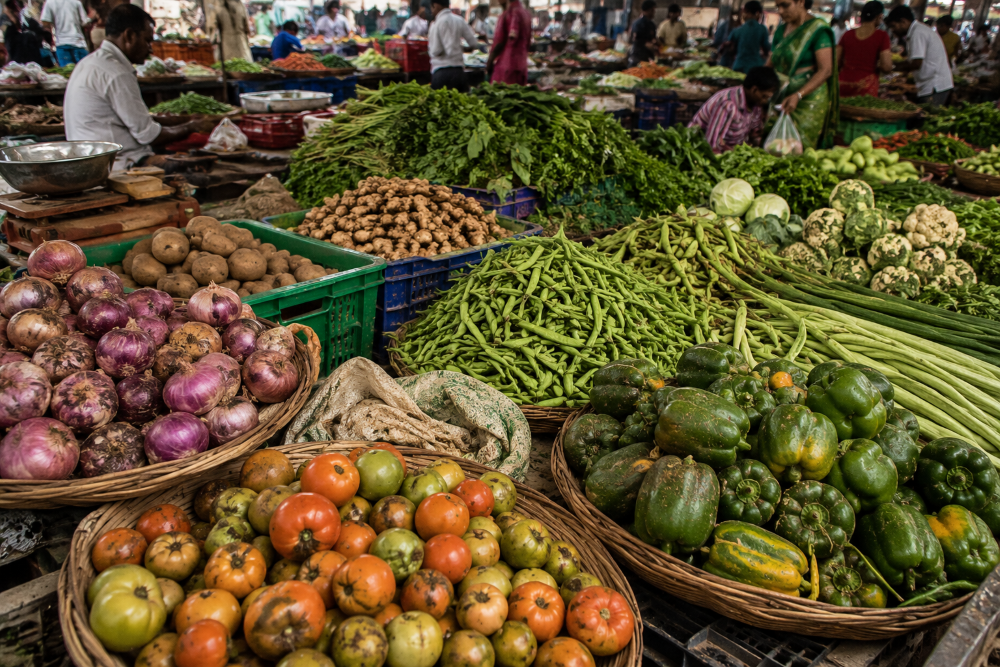
Every morning, millions of Indian families make the same assumption: the vegetables they buy from the local mandi or grocery store are fresh. After all, they look fresh. The tomatoes are red, the palak is green, the bhindi is firm. What could be wrong?
The reality of how most vegetables reach Gurugram and the wider NCR is more complex and more concerning than most families realise.
The 1,000 Kilometre Journey of Your ‘Fresh’ Vegetables
Most vegetables sold in Delhi NCR do not come from nearby farms. Tomatoes come from Maharashtra and Karnataka. Potatoes arrive from Agra and UP. Onions travel from Nashik. Capsicum comes from Himachal Pradesh. Even leafy greens like palak are often grown hundreds of kilometres away.
Before a vegetable reaches your mandi, it typically passes through: the farm, a local aggregator, a district level mandi, a state level wholesale market (like Azadpur in Delhi), a city-level distributor, the local mandi, and finally your home. That is at least 5 intermediary steps and a journey that can take 5 to 10 days from harvest.
What Happens to Vegetables During This Journey
To survive a 5 to 10 day journey without spoiling, vegetables need help. That help comes in several forms:
Cold storage: Many vegetables are placed in cold storage at harvesting, extending shelf life but halting the natural ripening and nutrient development process.
Post-harvest chemicals: Vegetables may be treated with thiabendazole (a fungicide), chlorine washes, or wax coatings to preserve appearance and slow decay.
Calcium carbide ripening: Mangoes, bananas, and some other fruits are commonly ripened using calcium carbide a chemical that produces acetylene gas and accelerates ripening. Calcium carbide may contain traces of arsenic and phosphorous.
By the time a vegetable reaches your kitchen, it may be nutritionally compromised, chemically treated, and days away from being at its peak.
The Freshness Myth Why ‘Fresh Looking’ Is Not the Same as ‘Fresh’
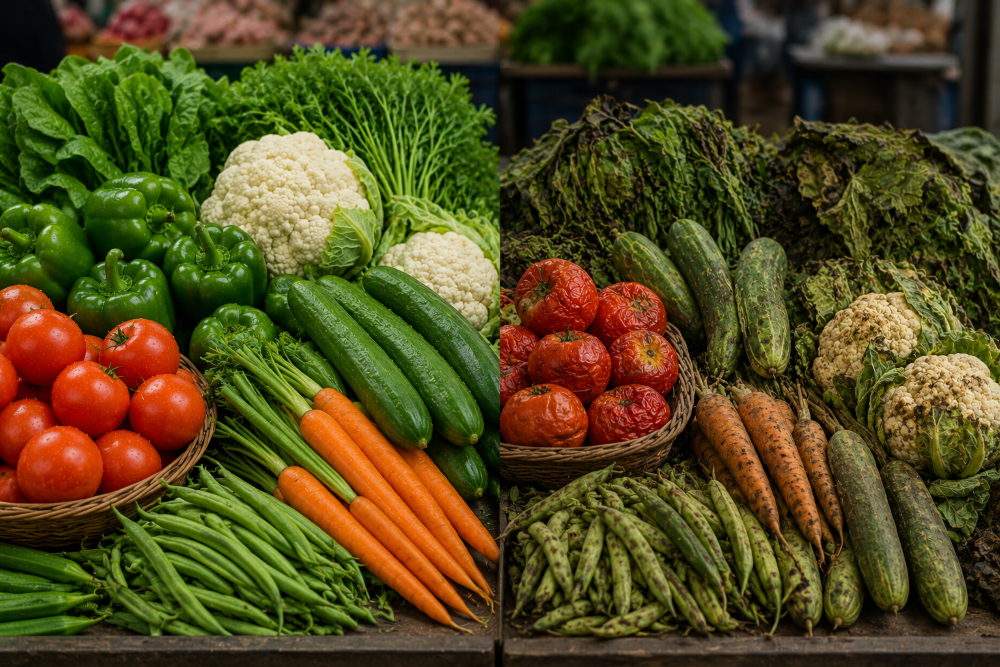
Visual freshness and nutritional freshness are not the same thing. A vegetable that has been in cold storage for 10 days and then treated with ethylene gas to re green its skin can look perfectly vibrant while having lost 40 to 60 percent of its vitamin C content.
Research published in the Journal of Agricultural and Food Chemistry found that spinach stored for 7 days at room temperature lost approximately 47 percent of its folate content. Even refrigerated, significant nutrient losses occur within days of harvest.
Real freshness is measured in hours from harvest, not days or weeks. And that kind of freshness is only possible through farm direct models.
What Farm Direct Vegetables From Gurugram Look and Taste Like
Gurvani Naturals harvests vegetables at their farm on Sohna Road, Gurugram, and delivers them within hours. The supply chain has exactly one step: farm to your door.
Families who have made the switch consistently report the same thing: the vegetables smell different. The tomatoes have a tangy sweetness absent from mandi tomatoes. The leafy greens stay fresh in the refrigerator for days longer. The bhindi does not go limp the next day. The coriander actually smells like coriander.
These are not marketing claims. They are the predictable result of shorter time between harvest and plate.
The Nutrition Argument for Local, Farm Fresh Vegetables
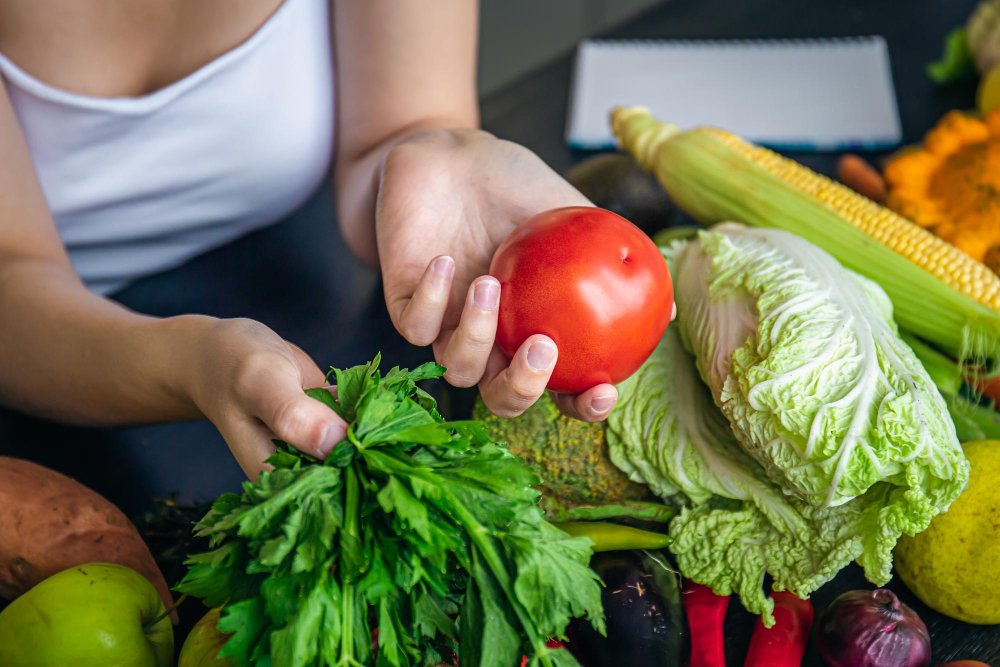
Eating truly fresh vegetables is not just about taste. Certain water-soluble vitamins particularly vitamin C and B vitamins begin degrading immediately after harvest. Antioxidant compounds like flavonoids and carotenoids are similarly sensitive to time, light, and temperature.
A tomato harvested this morning and eaten this evening has a fundamentally different nutritional profile than one harvested 10 days ago and stored in cold chain. For families in Gurugram managing lifestyle conditions like diabetes, thyroid disorders, or cardiovascular concerns, the quality of daily vegetables is not a trivial matter.
Frequently Asked Questions
How can I find out where my mandi vegetables come from?
You can ask your mandi vendor directly. Most honest vendors will tell you the source state. If they cannot or will not tell you, the provenance is unknown.
Are vegetables from a local farm always better than mandi vegetables?
Not necessarily it depends on the farming practices of the local farm. A local farm using heavy pesticides may produce more harmful vegetables than a responsibly managed distant farm. The key combination is: local AND chemical-free AND freshly harvested.
How do I switch to farm-fresh vegetables in Gurugram?
Contact Gurvani Naturals at gurvaninaturals.com or call +91 9170116611 to start a weekly vegetable box subscription. Deliveries cover Gurugram and the wider NCR.
Do farm fresh vegetables last as long in my fridge?
Actually, they last longer. Vegetables that have not been in cold storage and are genuinely fresh at the time of delivery stay fresh in your refrigerator for 5 to 7 days longer than mandi vegetables that may already be several days old when you buy them.
| Switch to Farm Fresh Vegetables in Gurugram → gurvaninaturals.com | +91 9170116611 |